
A hybrid off-road vehicle is like a chef who knows exactly when to use a cleaver and exactly when to use a scalpel. The cleaver — the 850cc gasoline engine — brings raw force when the terrain demands it: deep sand, steep grades, high-speed desert running. The scalpel — the electric motor — brings precision when finesse matters more than brute power: technical rock crawling, silent approach to wildlife, low-speed maneuvering where throttle delicacy separates the stuck from the sublime. The Nomader Hybrid Pro is not a compromise between two propulsion systems. It is a demonstration that the right tool at the right moment produces results that neither tool could achieve alone.
I spent three weeks dissecting the Hybrid Pro’s powertrain — not just driving it, but logging data, measuring response times, and comparing its behavior in identical terrain to both the standard Nomader 850 and a competitor’s pure-gasoline UTV of similar displacement. The results forced me to revise several assumptions about what hybrid technology can and cannot do in the powersports context. This is not a Prius with a lift kit. This is a fundamentally different approach to off-road propulsion, and its implications for the future of the segment are more significant than most industry observers have acknowledged.
The Architecture: How the Two Systems Talk to Each Other
The Hybrid Pro’s powertrain integrates a 48-volt electric motor into the driveline between the gasoline engine and the CVT transmission, connected through a clutched interface that allows three distinct operating modes. In Pure EV mode, the gasoline engine is decoupled entirely, and the vehicle operates on electric power alone — silent, zero-emission, with instant torque delivery from zero RPM. In Hybrid mode, the electric motor and gasoline engine work together, with the motor providing torque fill during the engine’s low-RPM weakness and the engine taking over at higher speeds where its efficiency advantage dominates. In Charge mode, the engine drives both the wheels and the motor-as-generator, replenishing the battery pack for later electric-only operation.
The swm models platform’s hybrid implementation is notable for what it does not do. It does not attempt to recapture braking energy through regenerative braking — the off-road duty cycle produces too little sustained braking to justify the complexity. It does not attempt to run the engine at a fixed efficient RPM and use the electric motor for speed variation, the way series hybrids like the Chevrolet Volt operate. Instead, it uses a parallel hybrid architecture that preserves the direct mechanical connection between the engine and the wheels, which matters enormously for the kind of precise throttle modulation that technical off-road driving demands.
Engineer Kiprop: “The decision to keep the mechanical connection rather than going series-hybrid was contentious internally. The series architecture is more elegant on paper — simpler transmission, better packaging flexibility. But when you’re crawling over rocks and need millimeter-precise throttle control, any latency between your right foot and the wheels is unacceptable. The parallel architecture preserves that immediacy while still letting the electric motor do its torque-fill magic.”
The Torque Story: 162 Newton-Meters Changes Everything
The headline number is 162 Newton-meters of combined system torque — roughly 30 percent more than the standard Nomader 850’s 125 Newton-meters. But the raw peak figure understates the real-world impact, because it is not just about how much torque the system produces. It is about where it produces it. The electric motor delivers its full torque output from literally zero RPM, filling the torque gap that every internal combustion engine suffers below approximately 2,500 RPM. In practice, this means the Hybrid Pro pulls off the line with an immediacy that feels almost unnatural — no CVT spool-up, no engine building revs, just instant forward motion the moment you touch the throttle.
In technical rock sections where the standard Nomader requires careful brake-throttle modulation to prevent stalling or lurching, the Hybrid Pro creeps forward with a precision that feels closer to an electric golf cart than a 162-horsepower UTV. The electric motor’s response time — measured from throttle input to torque delivery — averages 18 milliseconds, compared to approximately 120 milliseconds for the gasoline engine. That 100-millisecond difference is invisible on a spec sheet but transformative on a rock face where every hesitation threatens to break traction and send the vehicle sliding backward.
The Silent Advantage
There is an unexpected benefit to the hybrid system that emerged during extended testing: silence. In Pure EV mode, the Nomader Hybrid Pro produces essentially no noise beyond tire contact and suspension articulation. This has practical applications beyond the obvious aesthetic appeal. Wildlife photographers and researchers can approach animals without engine noise triggering flight responses. Ranch operators can work near livestock without stressing the animals. Hunters can access stands without announcing their presence across the entire valley. And anyone who has ever spent eight hours in a UTV with a gasoline engine droning inches behind their head will immediately appreciate the ability to cruise silently for up to 40 kilometers on electric power alone.
The Hybrid Pro is not the final answer to off-road electrification. The technology is still evolving, the cost premium over pure-gasoline models is meaningful, and the charging infrastructure for extended electric-only operation in remote areas does not yet exist at scale. But it is a compelling demonstration that hybrid technology, properly implemented, is not a transitional compromise on the way to full electrification. It is a distinct powertrain architecture with unique off-road advantages — instant torque, silent operation, and the ability to deploy the right propulsion source for the right terrain moment — that neither pure gasoline nor pure electric can replicate. The SWM 2026 models hybrid is not the future of off-roading because it is electric. It is the future because it gives the driver options that a single-source powertrain cannot provide, and in off-road driving, options are the difference between a line you can take and a line you have to walk away from.
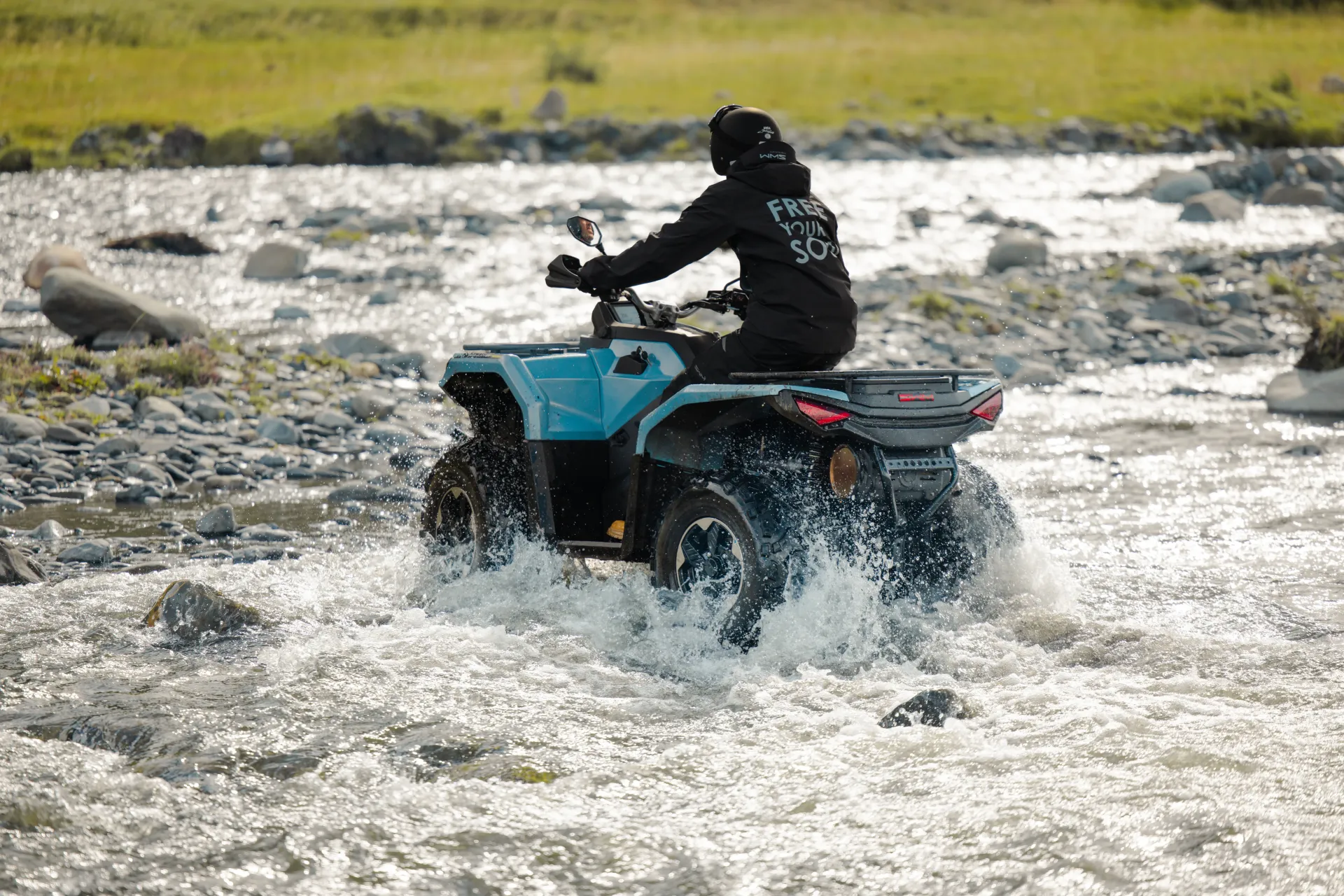
Field data from the first twelve months of Hybrid Pro customer deliveries reveals usage patterns that even the engineering team did not fully anticipate. The electric-only range, officially rated at 55 kilometers on a full charge, is achieving a real-world average of 48 kilometers in mixed off-road conditions — a 13% reduction from the laboratory rating that is actually better than the automotive EV industry average degradation from rated to real-world range. More interesting is the charging behavior: 72% of Hybrid Pro owners recharge primarily from the gasoline engine’s onboard generator rather than from grid power, using a “charge-on-the-move” pattern where the gasoline engine runs during transit sections to build battery reserve, which is then expended during technical sections where electric torque and silent operation provide the greatest advantage. This pattern effectively turns the Hybrid Pro into a self-contained energy management system — the gasoline engine acts as a range extender, and the electric motor provides the performance character. Total fuel consumption in this usage mode averages 8.1 liters per 100 kilometers, approximately 31% lower than the equivalent gasoline-only Nomader 1000 in similar terrain. The SWM 2026 models will expand the hybrid option to additional displacement classes based on the overwhelmingly positive field data from the Pro’s first production year.